















Album review: SOFT MACHINE – Slightly All The Time, The Recordings 1970-1974
Share the post "Album review: SOFT MACHINE – Slightly All The Time, The Recordings 1970-1974"
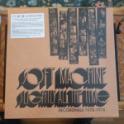
Sony [Release date 30.10.26]
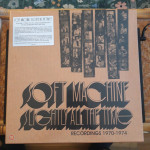
Now here’s a serious box, magnificent, and Canterbury progressive band Soft Machine are as deserving as any, through the quality of their output and their influence too. Formed in the mid 60s (from the ashes of The Wilde Flowers), they were pioneers of the Canterbury scene, British psychedelia, and architects of progressive and jazz rock. And in their early years, their roster included Kevin Ayers, Daevid Allen and even Andy Summers (he of The Police 10 years later). The whole Canterbury scene also spawned bands such as Caravan, Gong, National Health, Hatfield & The North and Matching Mole.
This box takes in the first half of the 70s, kicking off with 1970’s double LP Third, a game changing, almost life changing album. And across the 14 CDs and 3 blu ray discs, there are five original albums in Third, Fourth, Fifth, Six and Seven, all recorded for CBS and remastered from the original ¼ inch tapes, all of the existing BBC sessions (half of which are previously unreleased), and a hefty amount of rare and previously unreleased concert material from the UK, France and Switzerland. An entirely different recording of tracks for the ‘Fifth’ album and over 6 hours of audio-visual material from European TV broadcasts.
When you open the box, a solid affair to say the least, there are two 12” foldout packages that contain the 17 discs and additional artwork, the discs are easily accessible without risk of card damage. Then there’s the 12” book. And WOW what a book. A heavy, solid hardback coffee table affair, and rf is by far the most comprehensive book I’ve ever seen in a box set. Ever.
There are plenty of photos of the band in the studio and on stage, some great pics taken at the Montreux Jazz Festival, further memorabilia such as concert posters and tickets, and the hand written boxes that tapes were kept in, in the studio. Add to that a 20,000 essay with new commentary, quotes, and a family tree that points out which line-up recorded which studio album. It didn’t take long perusing this to realise just how deep the research has been, between quotes, facts and tracks. The essay is well written and very informative. Intriguing to say the least.
And details of every disc with tracks, credits and line-ups, including the live discs. The book is clearly completed by the author’s access to the band’s archives, personal and studio. It takes The Kitchen Sink to a whole new level.
So thus far, the definition of quality has been set a whole new level. And on to the music.
1970’s Third was a double album featuring four 18-19 minute tracks, two of them live (recorded at the Fairfield Halls at the start of the year). The band at the time featured Elton Dean (saxophone), Mike Ratledge (organ, piano), Hugh Hopper (bass) and Robert Wyatt (drums, occasional vocals, organ, bass), plus guests, including Lyn Dobson on flute and saxophone on the opening track Facelift.
That opener kicks off very experimentally, some meandering noises before the band come in. Freeform jazz fusion comes to mind, the band swinging in and out of cohesion, the saxophone adding an extra dimension. And the flute on side 2’s Slightly All The Time is good, reminiscent of King Crimson. Robert Wyatt’s rhythms are very interesting, explorative, this track moves from the chaotic avant garde and free jazz of Facelift to a more fluid jazz fusion. Wyatt utilises 11/4 and 11/8, a little off the beaten track. Wyatt’s Moon In June is the only track to feature vocals (and one of the last Soft Machine songs to do so), a more whimsical track, with psychedelic leanings. More Psych Jazz on Out-Bloody-Rageous. Throughout the album the band use various effects, live/studio splicing and loops.
This album is widely considered the band’s best, a highlight of the genre. Disc 2 is recorded live in London 1970, shortly before Third was released, and shows how the band worked live, and the saxophone on Esther’s Nose Job (from Volume Two) moves into fiery free jazz territory. Disc 3 features three live BBC sessions, all from 1970. This sees the band in ‘Third’ mode at the start of the year, and the track Eamonn Andrews (a track written for Third that didn’t make the album) is historically important. Then by December that year the band were moving into the colder jazz direction of Fourth. Excellent recording quality, tight performances, stripped down of the studio effects, and unedited. Essential.
Disc 4 was recorded 13 August 1970 at The Proms, and broadcast by Radio 3. A wonderful tight sound, on form, giving the band a new audience, and an important part of Soft Machine’s history.
The band’s 1971 fourth album, aptly titled Fourth (or ‘4’), and like many of Soft Machine’s albums it has been reissued many times before, but here benefits from the new mastering, giving greater depth and separation. A difficult time for the band as internal tensions were forcing drummer and founder member Robert Wyatt out of the band. All credit to him then for his performance on this album, his playing tight, carrying the band through some complex time signatures (especially on opener Teeth). On this album the transition from Canterbury psychedelia to full on British jazz fusion
was complete. The piano, bass and drums work well together under the saxophone. The band were the same four piece, with guest musicians adding double bass and brass various. Side two is taken up by the multi part Virtually; use of loops, a minimalist dark feel, a similarity with early Weather Report here.
Jumping a disc to #7, the Gondel Filmkunsttheater show was recorded in Bremen on 23rd March 1971 for broadcast on Radio Bremen. Heavily bootlegged, it was officially released on Cuniform as the Virtually CD in 1998. Long out of print, the full set is here and, remastered from the original tapes, given a new depth. A tight, tense and fiery performance, a great version of Facelift, Fletcher’s Blemish stands out as does Hugh Hopper’s bass.
Discs 6 and 8 both feature material recorded live at the BBC. The ‘Third’ fourpiece recorded a BBC Radio 1 In Concert in March 1971, and near the end of Wyatt’s time with the band. The keyboards and bass are overdrive, the performance crisp and dynamic, and given what was probably going on behind the scenes Wyatt’s performance is spot on too.
Then we get some Radio Sessions that show the band in transition; June and November 1971 feature Phil Howard on drums, with John Marshall on the drum stool in July 1972
Howard’s playing is looser in the first session, but by November 71 the band were darker and more minimal. The session from July ’72, with John Marshall and multi instrumentalist Karl Jenkins (and well known classical and crossover composer) takes the band into Fifth and Six territory, Having two versions of the track Drop help show the development.
Disc 9 is the album Fifth. And with Robert Wyatt now gone, pianist Mike Ratledge was the last founding member standing. Original sessions (November 1971) with Phil Howard on drums produced a whole album’s worth of material, but the band found his free flowing style too unstructured, pulling the band away from their riff-driven fusion trajectory. Much, but not all, was rerecorded early the following year with former Nucleus drummer John Marshall. The album opens with All White and some haunting saxophone, and as the band come in, there is definitely an improvisation nod to not just the drums but the whole band.
The keyboards and saxophone on Drop seem to go in different directions but it still works. The album is classic British fusion, with freeform in places. The bonus (original) takes are really worth checking out as there is more boundary pushing, compared to the structure of other albums.
Disc 10 was recorded in July 1972 for a BBC Radio 1 In Concert programme, and it sees the band taking a tighter direction with drummer Marshall. It was also recorded shortly before saxophonist Elton Dean left the band, to pursue other projects and remain in the (Soft Machine’s earlier) more free flowing direction. The track All White stands out for
it’s manic saxophone that locks horns with the keyboards, and Slightly All The Time is given a very different lease of life, and tracks like Drop get a jazz-punk aggressive energy.
Many tracks have been released (at least in part) on bootlegs and long out of print CDs, so the full unedited complete show here is welcome, as is the sound quality.
Disc 11 is the album Six, originally a double album recorded at the tail end of 1972 and released in 1973. Now with Karl Jenkins as a full member of the band, on oboe, saxophone and keyboards, this would be bassist Hugh Hopper’s last album with Soft Machine. The first LP is a live set, recorded in Brighton and Guildford, the tighter yet explosive drumming gives some older tracks a new life, and Jenkins’ woodwind work interplays with the keyboards seamlessly. All White Stands out, while on the studio disc the new line-up gels just as well, it’s a little sleeker than previous albums, The Soft Weed Factor stands out. And again the mastering helps the sound quality too.
Recorded later in 1973. Disc 12 and the album Seven. With player Roy Babbington replacing the departed Hugh Hopper, three quarters of the band were now formerly of Nucleus. Gone are the chaotic long suites, here we get shorter, sleeker and more accessible tracks that mix modern jazz rock with their prog roots. There’s almost a nod to Jeff Beck with Jan Hammer kind of fusion.
Opener Nettle Bed is a great start, while later on there’s a deeper heavy jazz/funk groove. For the novice, this may be a good album to start with.
Discs 13 and 14 are live sets; 13 was recorded for the BBC across 1973 and 1974, and shows how the new line-up were operating. A new level of sleekness but with some remaining improvisation. Tight yet free flowing, and a little more aggressive on stage than they were on record. The final CD was recorded at Montreux, Switzerland, July 1974. A new direction here, with the introduction of guitarist Allan Holdsworth making up the new five piece. By then the band were writing and rehearsing for the 1975 album Bundles (outside the remit of this set), a good indication of direction here with the showcasing of early versions of some tracks. The latter day sleekness with the fire of Third.
Not a foot wrong on the 14 CDs with so much bonus material, and the marvellous mastering too.
The final three discs feature 6 hours of video material, both live performances and interviews. Much of the material was recorded specially for TV in France, Belgium and Germany, and some UK video there too. Quality is excellent, and while some has been previously issued on DVD (we’re not counting the bootleg VHS), the Voiceprint/Cuniform DVDs are long out of print; getting all this together is a bonus and adds a great deal of value, artistically, historically, and financially. And that last point is important, as some boxes can be prohibitively expensive; this one (give or take a bit either side of £100) is exceptional value; it’s not just the 17 discs you get, it’s the research, information, the mastering, the book, the physical quality, The standard of everything here is elite.
I feel I’ve become intimately knowledgeable and familiar with the band going through this set. That’s how it should be.
5/5 for the music
5/5 for the contents
5/5 for the package
Review by Joe Geesin
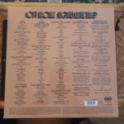
CD 1: Third
1. Facelift
2. Slightly All the Time
3. Moon in June
4. Out-Bloody-Rageous
CD 2: London – May 1970
1. Facelift
2. Moon in June
3. Esther’s Nose Job
CD 3: BBC Radio Sessions – 1970
BBC Session – 4th May 1970
1. Slightly All the Time
2. Out-Bloody-Rageous
3. Eamonn Andrews
BBC Radio 1 “In Concert” – 31st May 1970#
1. Facelift
2. Esther’s Nose Job
BBC Radio 1 session – 15th December 1970
1. Virtually
2. Fletcher’s Blemish
CD 4: The Promenade Concert Royal Albert Hall 13th August 1970 (Radio 3)
1. Out-Bloody-Rageous
2. Facelift
3. Esther’s Nose Job
4. Pig
5. Orange Skin Food
6. A Door Opens and Closes
7. Pigling Bland
8. 10:30 Returns to the Bedroom
CD 5: Fourth
1. Teeth
2. Kings and Queens
3. Fletcher’s Blemish
4. Virtually Part 1
5. Virtually Part 2
6. Virtually Part 3
7. Virtually Part 4
CD 6: BBC Radio 1 In Concert – 11th March 1971
1. Blind Badger
2. Neo Caliban Grides
3. Out-Bloody-Rageous
4. Eamonn Andrews
5. Pigling Bland
6. Kings and Queens
7. Teeth
8. All White
CD 7: Gondel Filmkunsttheater, Bremen – Germany 23rd March 1971
1. Facelift
2. Virtually
3. Slightly All the Time
4. Fletcher’s Blemish
5. Neo-Caliban Grides
6. Out-Bloody-Rageous
7. Eamonn Andrews
8. All White
9. Kings and Queens
10. Teeth
11. Pigling Bland
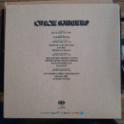
CD 8: BBC Radio sessions 1971
BBC Radio 1 session – 1st June 1971
1. Neo-Caliban Grides
2. Dedicated to You But You Weren’t Listening
3. Eamonn Andrews / All White
BBC Radio 1 session – 15th November 1971
1. As If
2. Drop
3. Welcome to Frillsville
BBC Radio 1 session – 11th July 1972
1. Fanfare
2. All White
3. M C
4. Drop
CD 9: Fifth
1. All White
2. Drop
3. M C
4. As If
5. L B O
6. Pigling Bland
7. Bone
8. As If (Alternative Sessions)
9. Untitled Blow (Alternative Sessions)
10. Pigling Bland (Alternative Sessions)
11. (coda) Esther’s Nose Job (Alternative Sessions)
12. All White (Take Two) (Alternative Sessions)
13. As If (Alternative Sessions)
14. Drum Solo (Alternative Sessions)
15. Pigling Bland (Alternative Sessions)
CD 10: BBC Radio 1 In Concert – July 1972
1. Fanfare
2. All White
3. Slightly All the Time
4. M C
5. Drop
6. Stumble
7. B.O.
8. As If
9. Riff
10. Gesolreut
CD 11: Six
The live record:
1. Fanfare
2. All White
3. Between
4. Riff I
5. 37 ½
6. Gesolreut
7. P.V.
8. Lefty
9. Stumble
10. 5 from 13 (for Phil Seamen with Love & Thanks)
11. Riff II
The studio record:
12. The Soft Weed Factor
13. Stanley Stamp’s Gibbon Album (for B.O.)
14. Chloe and the Pirates
15. 1983
CD 12: Seven
1. Nettle Bed
2. Carol Ann
3. Day’s Eye
4. Bone Fire
5. Tarabos
6. I.S.
7. Snodland
8. Penny Hitch
9. Block
10. Down the Road
11. The German Lesson
12. The French Lesson
CD 13: BBC Sessions 1973 – 1974
BBC Radio 1 John Peel session – 20th November 1973
1. Stanley Stamps Gibbon Album
2. Hazard Profile (Part 1)
3. Sinepost
4. Down the Road
BBC Radio 3 Jazz in Britain session – 26th August 1974
1. North Point
2. The Man Who Waved at Trains
3. Hazard Profile (Parts 1 – 4)
CD 14: Montreux Festival – 4th July 1974
1. Hazard Profile
2. The Floating World
3. Ealing Comedy
4. Bundles
5. Land of the Bag Snake
6. Joint
7. The Man Who Waved at Trains
8. Peff
9. The Man Who Waved at Trains (reprise)
10. LBO
11. Riff II
12. Lefty
13. Penny Hitch (coda)
Blu-ray #1 – The Video vaults 1970 – 1971
Theatre de la Musique, Paris. 2nd March 1970. Recorded for French television
1. Eamonn Andrews
2. Backwards
3. Mousetrap
4. Out-Bloody-Rageous
5. Facelift
6. Vocal improvisation
7. Esther’s Nose Job / Pigling Bland
Pop Deux 12 December 1970. The Recording of Soft Machine Fourth –
BBC TV – Anatomy of Pop 10th January 1971
1. Neo-Caliban Grides
Theatre 140, Brussels 14th January 1971. Filmed for “Pop Shop” – Belgian TV
2. Improvisation
3. Neo-Caliban Grides
4. Out-Bloody-Rageous
5. Kings and Queens
6. Teeth
7. Pigling Bland
8. Esther’s Nose Job (excerpt)
9. ….It’s Nothing
10. Mousetrap
11. Noisette
Blu-ray #2: The Video vaults 1971 – 1975
‘Beat Club’ Radio Bremen TV Session 23rd March 1971
1. Neo-Caliban Grides
2. Out-Bloody-Rageous
3. Vocal improvisation
4. Eamonn Andrews / All White
5. Berliner Jazztage Philharmonichalle, West Berlin 7th November 1971
6. Neo Caliban Grides
7. Slightly All The Time
8. Drop
9. M C
10. Out-Bloody-Rageous
11. As If
12. Dark Swing
13. Pigling Bland
14. Esther’s Nose Job (Outro)
Filmed 5th November 1972 at CBS Studios, London for “Emission Rockenstock”. Broadcast 30th January 1973 ORTF French Television
1. The Soft Weed Factor
2. LBO
3. Gesolreut
BBC TV – FULL HOUSE 17th February 1973. Soft Machine interviews and the band perform
1. Gesolreut
2. Fanfare / All White
Blu-ray #3: The Video Vaults 1973 – 1974
Soft Machine & Friends ‘Jazz Workshop’. Congresszentrum, Hamburg, Germany on May 17, 1973
1. Fanfare
2. All White
3. Link 1
4. The Soft Weed Factor
5. Link 2
6. 37 ½
7. Link 3
8. Riff
9. Stanley Stamps Gibbon Album
10. Chloe and the Pirates
11. Gesolreut
12. E.P.V.
13. Link 4
14. Stumble
15. One Across
16. Riff II
Bataclan, Paris 29th May 1973. Broadcast on “Pop Deux” – French TV 30th June 1973.
1. Riff / Down The Road
2. Gesolreut / Chloe And The Pirates
3. Montreux Jazz Festival 4th July 1974
4. Hazard Profile
5. The Floating World
6. Ealing Comedy
7. Bundles
8. Land of the Bag Snake
9. Joint
10. The Man Who Waved at Trains
11. Peff
12. The Man Who Waved at Trains (reprise)
13. LBO
14. Riff II
15. Lefty
16. Penny Hitch (coda)
Featured Artist: JOSH TAERK
Since early 2020 Josh has been entertaining us with exclusive monthly live sessions,
Check out videos here: https://www.facebook.com/getreadytorockradio
Josh now hosts “Taerk’s Tracks” as part of the Singer Songwriter Sunday sequence on Get Ready to ROCK! Radio.
This is the first show broadcast on 27 September. Josh presents some of his inspirational artists and tracks.
David Randall presents a weekly show on Get Ready to ROCK! Radio, Sundays at 22:00 GMT, repeated on Mondays and Fridays), when he invites listeners to ‘Assume The Position’. The show signposts forthcoming gigs and tours and latest additions at getreadytorock.com. First broadcast 27 September 2026.
How to Listen Live?
Click the programming image at the top of the page (top right of page if using desktop)
Get Ready to ROCK! Radio is also in iTunes under Internet Radio/Classic Rock
Listen in via the Tunein app and search for “Get Ready to ROCK!” and save as favourite.
More information and links at our radio website where you can listen live or listen again to shows via the presenter pages: getreadytorockradio.com
Power Plays w/c 12 October 2026
TAKIDA – Lion’s Den (Drongo Records)
SCARDUST – Symphony (Frontiers)
ANBERLIN – Gravity (Rude Records/Equal Vision Records)
MISSING TOYS – Lifeline (Pride & Joy Music)
SWEET GORILLA – It’s Your Life (5000 Records)
ROYAL BLOOD – Dead Company (Warner Records)
Featured Albums w/c 12 October 2026
09:00-12:00 The Best of 2003 – 2025 (Melodic Rock)
12:00-13:00 The Best of 2003 – 2025 (Melodic Hard Rock)
14:00-16:00 The Best of 2003 – 2025 (Singer Songwriter)
Our occasional Newsletter signposts latest additions to the website(s). We also include a selection of recent top albums, based on GRTR! reviewer ratings. The newsletter is sent out a few times a year.
If you’d like to register to receive this occasional mailing please complete the form:
If using a smartphone/tablet please tap here or re-orientate your device
(Note that this registration is separate from site registration which allows you to leave comments and receive daily emails about new content. If you wish to register for this – in addition or separately – please click or tap here – for more information – the form is at the foot of each page. Please read our privacy policy when opting-in to receive emails.
Recent (last 30 days)

Share the post "Album review: SOFT MACHINE – Slightly All The Time, The Recordings 1970-1974"
 PDF - you can delete unwanted sections